
What the Last 15 Years of Use of Force on Video Has Taught Us About Officers That Are Convicted, Fired, or Exonerated...
And Your Best Shot at Avoiding It All
In 2011, I watched the Department of Justice try to indict an officer based on a video alone.
Nobody in my agency had the knowledge or skill to stop it (at the time)…
They were going to indict the officer.
Fortunately, at the last minute they were caught red-handed telling lies.
It was a masterclass in trumped up charges, myths, and the political persecution of an officer…
Since then, I’ve seen the same pattern repeat across the country.
- Officers charged after a completely reasonable use of force.
- Officers charged because of campaign promises…not the law.
- Officer disciplined solely based on hindsight.
- Officers that were fired even though the admin knew the officer did nothing wrong (and forced to fight to get their jobs back).
- Lack of force investigations training by investigators.
- Command staff directing the outcome of an investigation… before it even started.
- Decisions made for politics…not policy.
After sitting in closed-door meetings, ARBITRATIONS, DEPOSITIONS AND COURTROOMS, I HAD A REALIZATION...
Their reasons were almost all made up.
And when a decision maker was forced to explain why they made the decision they made…
It was almost never backed up by training, policy, or anything other than their opinion.
so, I developed a course on how officers are wrongfully accused of unreasonable force:
Policing on camera
Is a live 4-hour webinar that teaches you how to spot and defend yourself against false accusations of excessive force, but most importantly…
HOW TO AVOID CONTROVERSY ALTOGETHER!!
What This Training Covers
This course is built on 15 years of watching what actually gets officers in trouble — and what protects them.
I
The Root Cause: Why This Keeps Happening to Good Officers
Why training alone and better reports alone won’t fix it. The systemic reasons good officers keep getting burned — and why no one inside your agency can give you this answer.
II
The Root Cause: Why This Keeps Happening to Good Officers
The specific on-camera behaviors that consistently appear in cases where officers get fired or charged. It has nothing to do with the force itself.
III
Force That Causes Controversy
The most common incident types that command staff routinely misinterpret. The video mechanics — frame rates, angles, technical bias — they’ll never understand without this training. Why hindsight is being weaponized against you.
IV
What You Can Do About It
How to write a report that works whether reviewers are open-minded or biased. The on-camera behaviors that protect you. How to articulate force in a way that exposes unfair investigation — and becomes your legal defense.
What You’ll Walk Away With
This will change everything you thought you knew:
- The specific on-camera behavior that appears in cases where officers get charged or fired — and it has nothing to do with the force itself
- What officers who don't get railroaded actually understand about how their on-camera behavior is being interpreted — and how that changes everything in the moment
- How coincidental timing between a suspect's actions and yours gets interpreted as unreasonable force
- The video mechanics command staff will never understand — frame rates, angles, technical bias — that explain why they're seeing something completely different from what actually happened
- Why a poorly written report on a complex incident doesn't just hurt you — it guarantees you'll be blamed
- What hindsight actually is — and how it's being used against you in ways you don't realize
- Why command staff interpret what they see through bias and gut feeling instead of policy — and how that gap becomes your problem
- How a strategically written report simultaneously convinces open-minded reviewers and exposes the bias of those who aren't — which becomes your legal defense
- How to write a report that exposes when your agency doesn't follow its own policy — turning their process into your defense
- The video biases that make reasonable decisions look unreasonable — and why slowing down footage, multiple angles, and knowing the outcome first completely change perception
- Why command staff believe unintentional acts were intentional — and exactly how to counter it
- The most common incidents command staff routinely misinterpret — and why your agency will never warn you
About Danny King
For the last 14 years, Danny has obsessed over the reasons officers are fired and charged after using reasonable force.
This class teaches you those reasons…
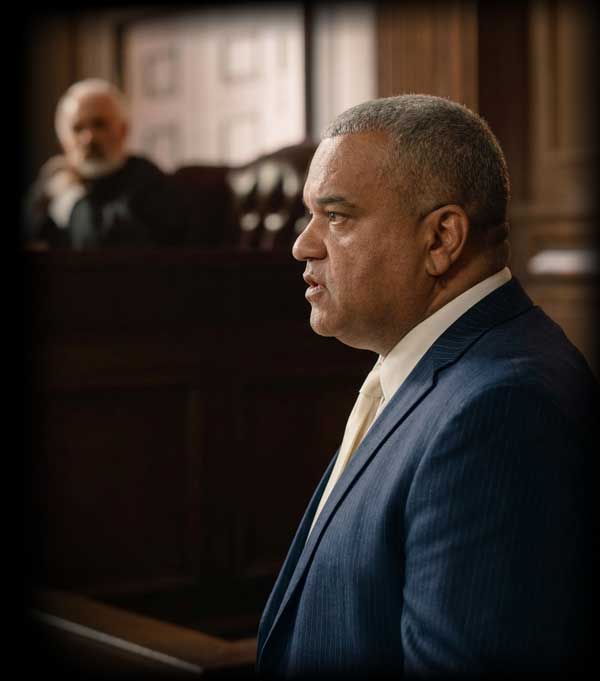
We're all one call away...
This officer was dispatched into a petit larceny where the suspect resisted and attempted to disarm his partner of his taser.
As a last resort, he used deadly force…
and was convicted of manslaughter
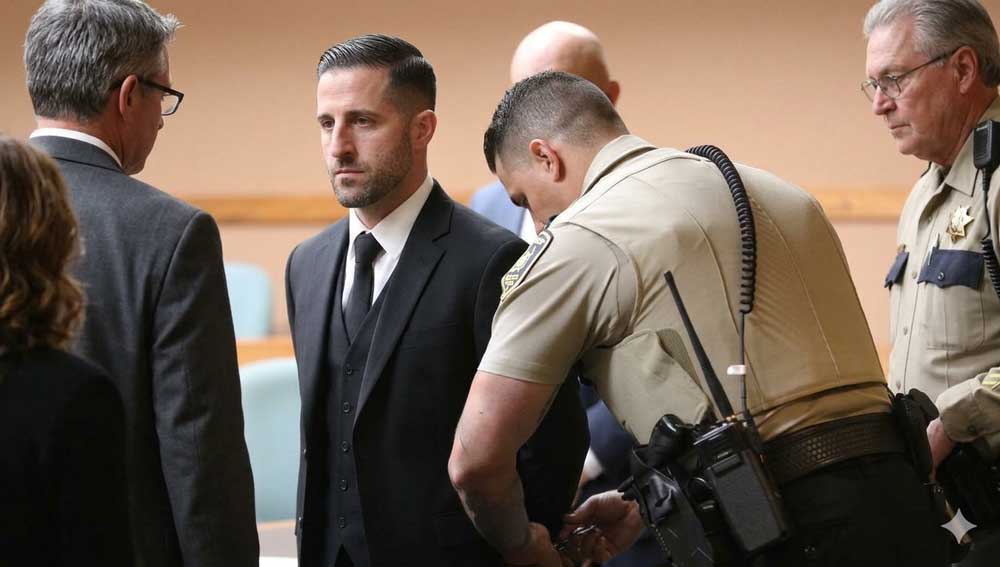
Like most officers that are wrongfully charged, he was dispatched into a random call where the suspect resisted and everything spun out of control..
Learn what you need to know…before… you get that call.
Pick Your Training Day:
June 17th (Wednesday)
0800-1200 (CST)
June 17th (Wednesday)
1300-1700 (CST)
June 18th (Thursday)
0800-1200 (MST)
June 18th (Thursday)
0800-1200 (MST)
If You're not certain you'll be treated fairly after a use of force...
You need this course!
Zero Risk
Try It. If It Doesn't Deliver — You Pay Nothing.
Register, attend, go through the class. If you don’t walk away with a fundamentally different understanding of how the deck can be stacked against you… and a concrete plan to protect yourself… we’ll refund every dollar. No questions. No hassle.
Still On The Fence?
I've been doing this a while... what can this class teach me?
If you’ve been doing this a while, then you’ve probably seen the betrayal or injustice that can happen inside of an agency. Most experienced officers have never had anyone sit down with them and explain how video is analyzed, how reports are dissected, and how bias shapes what command staff see when they review an incident. This training closes a gap that your agency has never addressed, because they can’t — it would require acknowledging that their own review process is broken.
Plus… if you didn’t think the class was worth it, we’ll give you your money back.
What If I can't watch it live?
After your training session, you’ll get full access to the recorded session for one year from the date of the session. You won’t miss anything. Watch it on your schedule, pause, rewind, take notes — it’s yours for a full year
I don't have $97 right now.
I understand…times are tough.
This training typically only exists as expensive in-person seminars costing thousands in tuition plus travel. Delivering it online is how I keep the cost at $97.
Drop your email below, and I’ll keep in contact with you about upcoming classes.
But remember, the cost of one sustained complaint, or the mental toll of getting disciplined unfairly makes $97 a small price to pay.
And if you register and genuinely feel it wasn’t worth it, you get your money back. The risk is entirely on us.
Also, there’s payment options for you at checkout.
Is this relevant to my states laws and my agencies policies?
Yes and no…
We aren’t going to touch on state laws, but we are going to dive into how policies are used against an officer (and how it’s almost always an opinion).
More importantly, the human factors: video bias, cognitive bias in reviewers, report interpretation, and the psychology of hindsight are the same across every jurisdiction. This goes beyond your agency because your agency’s training cannot give you this perspective. That’s what makes it valuable.
I'm pretty good... I think I can manage on my own.
Maybe. Until you get dispatched into a call beyond your control and have no framework for what comes next.
The officers who get railroaded almost always believe they handled it professionally — and they’re usually right.
What they did wasn’t the problem. The problem is almost always created by a person of authority.
What you’ll learn is how your behavior will be interpreted by someone watching a 30-second clip six months later in a conference room. That’s a learnable skill. And right now you probably don’t have it.
I'm a use of force instructor...what am I going to get from this class?
We’re going to take you far beyond your agency and into the nightmares officers have suffered due to assumptions, false beliefs, and politics… and sometimes malice.
Most importantly, you’ll see how our leaders think they are doing the right thing…but they aren’t…and why.
I work in a great agency, I don't think this applies to me.
I worked in a fantastic agency for 20 years…then one day it changed. People came in from outside (for the first time ever) and tried to make the PD like the agency they just left…